Showing posts with label EU nation. Show all posts

Monday, October 4, 2010

Italy before being a European Union nation

What was Italy like before joining the EU and before being one of the current seventeen nations that trade the Euro?

Italia, with the magnificence of its eternal city of Roma, offers some of the most interesting history on the planet.

A common question about the ancient history of Italy is whether or the history of Italy is the history of Rome. Italy as we know it today is a peninsula with the Alps forming the north and northwest boundary, the Adriatic sea being the east border, the Mediterranean on the south, and Mare Tyrrhenum or the Tyrrhenian sea forming the western border. The Alps form a natural barrier which seperates Italy from the rest of Europe. From Mont Blanc to the sea the mountains which peak in places at 15 thousand feet above sea level formed a natural defense for the ancient cultures of this peninsula. The Appenines (maritime Alps ) are another mountain range which adds to the Italian landscape. On the Mediterranean side the Islands of Sicily, Corsica, and Sardinia also play a major role in the historical development of the Eternal City of Rome and of Italy. Fresh water rivers such as the Po and the Athesis are fed by tributary streams like the Duria, and the Trebia. Italian fresh water lakes mark the landscape along these waterways.

From the time of the ice age to the Holocene period (c. 10 BC ) there were frequent periods where glaciers either formed or retreated from the Alps and Apennines. Hunter gathering cave dwellers shifted with these climatic changes. There is half a million years of prehistory in the Italian peninsula. Sometime between 10 thousand years  ago and six thousand years ago the early Italians became agricultural city dwellers, capable of raising animals, weaving textiles, and building clay structures and wooden sea fairing vessels. Cultures such as the Veneto, the Campignian, the Gargano, and others advance into the copper age and the bronze age.

By 1000 BC the are into the iron age as are the neighbouring Greeks and Phoenician and others. About this time the Etruscan civilization is developing and occupying lands. The Veneti culture is older. While Venitian is a romantic language it is not the original language of the Veniti culture. This Veniti cultural language looks more like a precursor to Latin and as similarities to some Celtic and Germanic languages ( wikipedia ). The Adriatic Veneti go on to battle the Celts and the Greeks and later ally with the Romans in the Second Punic War. The origin of the Veneti culture is likely the Eneti people mentioned by Homer in the Iliad. Other ancients who mention assimilations of the Enotoi and Veneti include Titus Livius and Pliny the Elder.

The Etruscans are more mystical in nature. The people of Etruria are the Tyrrhenians and they were an advanced culture which predate the Romans. Once Rome was established the Etruscans seem to have conquered the Eternal city for a time. What art and architecture is left of these mysterious people seems to show some Greek influence. In the end the Etruscans, like the Veneti, were assimilated in the Roman empire.

Since history is open to interpretation then here is our take on the Etruscans. It is pure speculation however. Herodotus mentions that the Etruscans are a revolutionary group who took stem from Anatolia and who invaded Etruria sometime between 1000 and 800 BC. Another legend goes that the god Mars, through the magic of poiesis, created Remus and Romulus. These two brothers were revolutionaries who went on to build the foundation of a new culture. Remus and Romulus needed a city to promote their sovereignty and they argued about the name of this city. In the heat of the argument Romulus kills Remus and names his eternal city Roma.

Could Remus and Romulus have been Etruscans or separatists from a Greek influenced people from Anatolia who were looking to build a new breed of people ? It's all just speculation..............and it's all just politics.....

The Etruscans were chased from Rome in 509 BC states the story of the expulsion of Tarquinius Superbus. And thus began in earnest the process of unifying Italy. ( see Etruscans )

Adalaide of Italy - image courtesy Wikimedia
However this is but the first attempt at unifying the Italian peninsula and not the political and military events of the 1800's which led to the Italian Risorgimento or Italian Unification and Kingdom of Italy founded in 1861.

Here's a quick tour of what happens in the Italian peninsula from 800 BC to 1800 AD.

  • 753 BC Rome is founded
  • 616 BC Tarquinius is crowned
  • 534 BC Tarquinius II rises to power
  • 509 BC Rome becomes a Republic and the main player in Latium
  • 400 BC Gauls plunder Rome
  • 334 BC ++ Rome conquers and colonized through the Samnitic wars
  • 280 BC Roman coins are circulating
  • 264 BC Carthago wars begin
  • 100 BC Ally wars and civil wars lead to the dictatorship of Sulla and the rebellions of Spartacus
  • 49 BC Caesar becomes new dictator but is killed in 44 BC which leads to the election of Augustus ( Octovianus ) to the rank of Emperor of Rome.
  • Rome is rocked by the Eruption of Mount Vesuvius in 79 AD
  • 97 AD human sacrifice is outlawed throughout Roman Empire
  • Christian persecution is widespread until Constantine becomes Emperor in c. 324 AD - capital is moved to Constantinople 330 AD  in Anatolia near Byzantium
  • The Roman Empire begins a great division where east is centred around Constantinople and west is ruled by a western emperor and vandals plunder Rome.
  • 402 AD Imperial court is moved to Ravenna
  • 476 AD Fall of the Western Roman Empire and Romulus Augustus is last Western Emperor.
  • c. 500 AD Rome looks to Frankish kingdom and British legion for protection and Theodoric the Great king of the Ostrogoths becomes king of  Italy
  • Rise of Papal power in Italy begins with the monk Gregory who established six monasteries in Sicily. Gregory is born in c. 540 AD and does is missionary work on the island of Britain
  • 540 AD Greco-Roman Byzantium reconquers Italy in Gothic Wars
  • 551 AD Lombard King Aistulf captures court city of Ravenna
  • 568 to 774 AD Lombard Kings rule Italy - lombards = longobards or men with long beards - start out as Aryan or a mix of community oriented belief but end up accepting Catholicism
  • 590 AD Gregory the Monk becomes Gregory I, the Great pope and lord of the city of the Eternal City of Rome
  • 774 AD Charlemagne the Frank monarch conquers the northern Italy Lombards and is crowned Emperor of Rome in 800 AD by Pope Leo III at St Peters Basilica
  • Under Charlemagne and his successors Italy is part of the Frankish empire.
  • c. 850 AD northern Italy is again an independent kingdom
  • 950 AD Adelaide, daughter of Rudolf II of Burgundy, consort wife of Otto the Great Holy Roman Emperor, inherits Italy which becomes linked to the German estates and remains this way until the end of the middle ages during which time Holy Roman Emperors rule out of Germany
  • Lombard leagues continue to exist and Lombard duchies grow wealthy in the north where cities are left to self styled governments ( vassals to the German based Emperors ).  They will eventually move their estates out of feudalism and make them Republics
  • The Hohenstaufen German ruling Roman Emperors gain the throne of Italy in the late 1200's which is a crown of the Normans and includes Naples and the island of Sicily and which is associated to the popes who are Catholic oriented
  • Middle ages is a period of Holy Crusades and the Catholic popes have a certain amount of power in dictating who is considered the Holy Roman Emperor - an ongoing battle between popes from the south and emperors from the north - a battle between Guelphs and Ghibellines - feudal Italy
  • 1389 AD Cosimo the Medici, a wealthy Florentinian leads the Renaissance through institutions like the Platonic Academy which is a revival of the philosophical foundation of the Classical Greek Plato. 
  • The Italian Totalitarian
    Lorenzo de Medici
  • 1449 AD Lorenzo de Medici, son of Cosimo, openly rules as a totalitarian ruler. Pope Leo X is counted amongs his many children.
  • 1453 AD conquest of Constantinople can be a marker for end of middle ages and beginning of Renaissance
  • Renaissance in Italy begins in Tuscany in the city-states of Florence (Republic), Venice(Republic), Milan (Duchy), Naples (kingdom), and Romagna ( Papal State ). 
  • During the Renaissance common bankers and capitalists not of the noble class begin to redistribute wealth through commerce via the merchant class (high nobles). 
  • Renaissance meant returning to a classical learning style but it is a period when many human rights are abolished or downgraded - ie. slavery and human trafficking becomes more prominent, women's right are diminished.....
  • Many of these slaves ended up in America via the merchant ships which followed the flags of the earliest European explorers.
  • 1796 AD Napoleon Bonaparte sieges the Papal States and established French Roman Republics but papal sovereignty was soon restored - papal secular order was again the norm this highly conservative orthodoxy was not well received after the liberal french methods had been introduced and revolters (Italian Nationalists) brought on the end of the Papal States via a war with Austria ( closer to the House of Savoy and the Kingdom of Sardinia which was under the rule of Ottoman Sultans) and revolts against the northern central duchies, kingdoms, and papal states - the idea was for the creation of a single state for all Italian speaking people
  • The duke of Savoy ( Savoie ) in 1720 becomes the king of Sardinia.
  • In 1860 the Kingdom of Sardinia under the leadership of Giuseppe Garibaldi set out to conquer southern Italy and the dual rulers become known as the Kingdom of the Two Sicilies
In 1861 the Unification of Italy (Risorgimento) is nearly complete when old papal cities like Umbria and Marches are annexed to the new sovereignty. Vittorio Emanuele I becomes the first king the new Italian country. The House of Savoy continues to exist and the Piedmont estates become the capital of Piedmont, Turin, Italy and grow very wealthy through commerce like automobile manufacturing ( The Detroit of Italy).

Twentieth Century Italy.

In WW1 Italy allies itself with Britain and France who promise all types of global real estate concessions upon victory. By the end of WW1 Italy is not receiving payment and suffered economically much like Germany when the Deustche Mark hit hyperinflation. Like in Germany where Hitler came to the rescue, Mussolini found means of generating an economy inside Italy.

In 1922 Mussolini is building is reputation by working to expand the pre war Italian conquests. He is looking to Africa and the Ottoman Empire.

In WWII as a socialist military strategist he allies himself and his countrymen to the Nazi Germans when the trio group Italy, Germany, and Austria-Hungary are formed. This may seem strange when one considers that only a few years before the Italian found independence from Austrian rule through the Risorgimento. However, Austria had recently been purged into the German Nazi web. Mussolini was head of government for the Kingdom of Italy and his socialist political intents are said to have paved the way for full out fascism. He was the leader of National Fascist Party. He had joint control of the Italian military with Vittorio Emanuele III, son of the risorgimento newly elected king. Mussolini was intent on reviving the Roman Empire.

In 1940 the Italian Prime Minister Mussolini declares war on France and Britain. In 1943 Mussolini, the wantabee Hitler, loses all political support from the King Emanuele III who had him arrested and imprisoned. However, Hitler's Nazi came and rescued Mussolini and put him back to work towards building the new Roman Empire. They were now going against Italy.

After the war Italians were immigrating out of Italy towards places like Australia and America in order to get away from the horrendous living conditions. Italy is under reconstruction and many people are unemployed. Many Lira's are being made available by the government for infrastructure projects like running water and sewers but it is a slow process.

By 1957 the Kingdom of Italy joins itself to the European Economic Community which makes Italy one of the six founding members of the European Union.

In 1962 the Vatican under Pope John XIII the right to Italian freedom of democratic government as per the conscience of the voting public

In 1999 Italy adopts the Euro as it's currency of trade both inside the nation and on the international markets. It is amongst the first of the seventeen nations of the Eurozone to replace its fiat currency which up to 1999 was the Italian Lira.

Saturday, October 2, 2010

Estonia before it joined the European Union

Estonia Flag
In 2011 Estonia will be trading the Euro. How was Estonia before it joined the European Union ?

No such entity as Estonia existed before the twentieth century states Toivo Raun in Estonia and Estonians. In 1918 the Republic of Estonia is created.

Estonia borders the Baltic sea, Russia, and Latvia. The Estonian capital is Talinn and it is situated near the Baltic Sea and only about 100 miles across water from Helsinki, Finland.

There are less than 1.5 million people in this small Baltic country. Estonia became a member of the European Union on May 1, 2004 and it is the last of the seventeen nations to adopt the currency rules or the Eurozone or Euro area.

Much of Estonia is completely flat and the highest peak is a mere 318 meters above sea level. The average peak is 100 meters above sea level. This flat land is abundant in limestone and dolomite which is a good resource to have when construction materials are needed. However the economy of Estonia is based on the production of electronic and telecommunication gadgets. It's main trading partners are neighbouring countries such as Finland, Sweden, and Germany. The gross domestic products are 3 percent agricultural, 71 percent services, and 26 percent industry.

About 70 percent of Estonians speak a Uralic language while about 25 percent of the population speaks Russian.

Eurasia was populated by the earliest of humans. The Finno-Ugric emerged in the area where Estonia is today. In about 9000 BC gatherer hunters find resources around the River Parnu and the Kunda culture begins to develop around lakes like Peipsi and Vortsjar.

Recall that 9000 BC is when the period of the great floods occuring. It is the beginning of the Holocene period and the ice is giving way to land. Flash floods would certainly have been a hazard of pre-Estonians for many centuries.

Bronze working appears in about 1800 BC and during the Viking age the Kundra culture mixes heavily with Germanic tribes and Scandinavian tribes. Cattle raising, seal hunting, seems to lead the trade potential of these early Estonians who are now very able in using the dolomite and limestone quaries to their constructions. With wealth comes a need to defend sovereignty and fortified settlements begin to emerge. In about 500 BC Estonia enters the iron age. In this age of iron working the Estonian are also advancing their funerary rituals and "Celtic fields", or underground enclosed burial graves are replacing the earlier "burial mounds".

The Romans make their appearance in the first centuries AD. The Estonians are placed on trading routes between Scandinavia and Byzantium.  While the Estonians are more into raising animals than into agriculture they nonetheless have surpluses of grains which they export in about 1200 AD.

When the religious revolts began and protesters of the Catholic Holy Roman Empire adopted their own foundations of faith the people of Estonia became predominantly protestants. However this is only true for about 20 percent of the population since most of the people of this area are secularists and do not have strict religious convictions. Paganism or animism is a method of faith that was evident before the Germanic tribes brought with them the Roman Catholic rules of faith. With the reformation of 1520 Lutheran evangelical churches became the norm.

In the 1700's Russian Czars became the rulers of pre-Estonian society. With the Czars of Russia came the Orthodox Russian Church. This period is marked by places of worship like the Alexander Nevski  cathedral in Tulinn.

In 1945 the Soviets occupy the Republic of Estonia and religious worshippers were persecuted. This religious repression continued into the 1980's. The fight for indepence sees a resurgence of the Lutheran movement.

Note - Paganism is to the earliest Estonians. Roman Christians fight paganism with Catholic edicts. Reformists like the Lutherans fight the Papal religion of the Romans. Lutheranism is the religion of the Germanic tribes which eventually rule the Roman empire. Russian Orthodoxy is a Christian based faith and is highly influenced by the politics of the Czars.

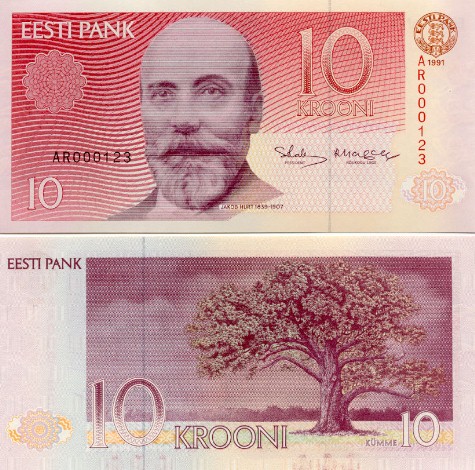
The currency of Estonia before it joined the European Union and adopted the Euro was the Estii Kroon which was broken into 100 senti. The Kroon replaced the Ruble in 1992 and became pegged to the Euro.
 

Sunday, September 26, 2010

Belgium before being a European Union nation

What was Belgium before being a European Union nation ?

Belgium Flag
Ceasar, the Roman Emporer, moves to conquer Gaul and mentions the Belgae. Gaul in latin is Gallia and refers to the western region of Europe approximately where France is today.

Ceasar states in 50BC

"...most of the Belgae descend from the Germani and had crossed the Rhine in ancient times because of the fertility of the soil and expelled the Gauls who had inhabited this place. "

Belinos (Belenus)  is a celtic deity somewhat similar to the Greco-Roman Apollo. Likely this is where the term Belga comes from. Bel is also a deity from the pantheon of the Sumerians. Belit is the feminine form of Bel and they are creation deities. Without providing evidence, it is possible to see how Roman emperors who liken themselves to Apollo would be insulted by the presence of people worshipping Bel or Belinos. Belgae is the plural form of Belga and the adjective is Bel-gic. The Gaul was an old French population and Belgium in french is Belgique.

John Koch in Celtic Culture states this about the Belgae people.

The Belgae were a sub group of the Gauls whose territory extended from the Seine to the Rhine, in what is now Belgium, northern France, the rhineland in Germany, Luxembourg, and the southern Netherlands.
The Belgae population was vast and many tribes existed including some of these :
  • Morini
  • Remi
  • Suessiones
  • Ambiani
  • Parisii
  • Bellovaci
  • and more
Koch speculates that the term Belga derives from Celtic terms like belgo and bolgom and leads to an theory that the Belgae Celts were a people who swelled like a bag full of fury and released their anger with a vengeance.

The modern name Belgium is  was officially adopted in 1831 when the Netherlands seperated themselves into an independent political entity. Belgium is named after the ancient Gallia Belgica.

After Caesar invades Gallia Belgica the Romans occupy the area for some 500 years and are conquered by the Germanic Franks. At the turn of the first millenium the Vikings had turned the Gallia into groups of feudal domains. French kings and German emperors ruled but their rule was subject to the respect of Counts who ruled fiefdoms. These Counts built fortified castles in places like Flanders and Ghent and ruled has vassals to the kings and emperors. 

The Gallia Belgica was a bustling trading ground and traders were making connections far into other areas. Feudalism fades away and towns begin to pop up everywhere along the trading routes. Flemish cloth was being loaded on merchant ships and was being exported along with lead, tin, coal, and more. The small towns became evermore powerful as the craftsman started to unite and the Flemish counts were losing their dominion.

The French kings were seeing opportunity here and tried to gain total control of Flanders.

In 1302 war broke out and the Battle of the Golden Spurs brought French Knights and Flemish militia together. The Flemish rebels won the battle and Flanders gained independence.

In the century following Burgundian dukes ruled the Gallia Belgica. At this time we get the term Conditor Belgii which translates to Belgiums founder. This title is given to Philip the Good who ruled from 1419 to 1467. Philip the Good ruled from Brussels and was amongst the wealthiest Europeans. In his age the first University is founded in the area and much great art and architecture provides cultural evidence of the rise of the Belgic people.

Gallia Belgica is part of the Low countries of western Europe. In 1519 new Roman Emperor was crowned. Charles the fifth ruled out of Spain. Earlier in life Charles V was risen to the position of Duke of Brabant and as such ruled the Low countries. He too ruled from Brussels as Duke of Brabant. As Roman Emporer he ruled from Spain. In later life he returns to rule from Brussels.

Interesting to this day and age the Belgium city of Brussels is the de facto capital city of the European Union. Belgium is today one of the seventeen nations trading the Euro and Eurozone member.

In the Dukes age Catholics and Protestants were setting the stage for the religious reformations that would change the Christian world. Charles was on the Catholics side and flooded the Low countries with Catholic mercenaries.

The Roman Emperor of Spain marked the area as the Spanish Netherlands and forced protestants out. Many of these protestants ended up in Plymouth where they embarked on a journey to the New World which will in a few centuries become the United States of America.

It is when Charles V hands over the Spanish Netherlands to Archduke Albert of Austria, husband of Infanta Isabella, daughter of Charles V, that the low countries boundaries truly start to emerge.

By 1650 the economic foundation of the low countries, mostly the cloth industry, had been lost to England. Poverty was rampant. Rebellion was met with war and the low countries or Spanish Netherlands were annexed to Austrian rulers.

This brings on the Austrian Hapsburg dynasty followed by a French conquest by Napoleon in the early 1800's.

The Battle of Waterloo in Brussels is resolved through the creation of the Netherlands United Kingdom. The Benelux nations of the UK are Belgium, the Netherlands and Luxembourg.

In 1830 the Benelux nation is dissolved at the London Conference and Belgium receives its independence. The Saxe-Coburg Leopold I becomes the first king of the monarchy of Belgium. His son succeeds him. The Saxe-Coburg-Gotha lineage formed through the merger of Saxon stock and Frankish stock.

Under the Leopold's Belgiums economy boomed mostly through industrial power and Belgian expansion into Africa. In 1908 Congo, Africa was annexed to Belgium.

King Albert I saw Belgium through the first world war. King Leopald III saw them through WW II.

In 1952 Belgium is one of the six nations that founds the European Coal and Steel Community. The ECSC is the first pillar of what will become the European Union.  Belgium traded its own currency called the Belgium Franc until 1999 when it was amongst the first European Union nations to enter the Eurozone and to trade the Euro exclusively. By 2002 the process was complete and the Belgium Franc was pulled out of circulation.

And that was Belgium before being a European Union nation.

Typos are free.


Greece before being a European Union nation

What was Greece before being a European Union nation ?


Greek modern flag
The neolithic stoneage people knew of the small island in the Mediterranean sea which today we call Crete. The Heraklion Archeological Museum is full of ancient Greek history that dates back to at least 6300 BC. Crete is one of several peripheral islands that are closely knitted into Greek history.

Heraklion is largest city of Crete and Crete is the fifth largest island in the Mediterranean.

Greece borders the Aegean sea, the Mediterranean sea, and the Ionian sea. These borders provided great defense in the old world. History is full of records of sea battles between Greece, the Turks, the Romans, and others.

By 1500 BC the Minoans had made their mark on Crete. The Minoans are sometimes credited with creating the first civilization in Europe. They began influencing the island in about 2700 BC and were skilled bronze workers. These people of Crete named by Arthur Evans after the mythical king Minos were conquered by the Mycenaean. The Minoan palaces were taken down and replaces in time. Mycenae was a fortified palace in the Peloponnese. The most popular Mycenaean King was likely Agememnon who is the legendary warlord who took his loyal followers into the Trojan war.

Initially the Mycenaeans and the Minoans were heavily involved in international trade and both were exceptional sea voyagers. However the Kings of Mycenae who ruled from the north of Argos came to dominate the suzerains of King Minos.

View Larger Map
Some legends have it that the lineage patron of Mycenae was none other than Perseus who was fathered by Zeus and mothered by Danae.

Perseus went to the cave of Graeae where strange women shared one eye and stole this oracle from them. " I have your eye", he said, " and if you don't direct me to the Nymph of the North........"  This type of tale is the mystery behind the beginnings of the Greek culture. These are the stories of Medusa's serpents and of dragon's lairs and of one eyed cyclops and gorgons.

By 1000 BC the Mycenaeans have all but disappeared and Greece is in a dark age. When Homer comes of age in about 700 or 800 BC he is recounting the poiesis of Genesis and defining the villains and heroes who existed before the dark age.

After the dark age a slew of city states such as Sparta, Corinth, and Athens, rose into prominence. Each city state had its own political system  but when the whole was threatened they would come together has one ( riding on the back of Perseus ) to defend the greater whole.

The Persian Empire led by King Xerxes starts invading the Greek Empire by 500 BC and the Greco-Persian wars continue to to plague the city states of Greece for about 50 years. At this time the forefathers of the great Greek philosopher Plato are amongst the leaders of the courts of Greece.

On the footsteps of the Persian wars came a generation of Peloponnesian war.

Plato is born in 427 BC and witnesses the tyranny of this period in Greece. This is the age of synthesis in Greece where oligarchical rule is about to merge with democracy. Plato writes a great thesis called the Republic which goes on to be used as a foundation for political ideology and continues to be studied today.

Plato also founds a great school called the Academy which is often considered the first University.

Alexander the Great follows on the footsteps of Greeks like Plato and Aristotle, and Democrates.......

Alexander the Great Macedon built an Empire for the Greeks but on his death the legacy quickly crumbled. His empire was divided between Ptolemy who received Egypt, Seleucus who received Persia, and Antigonus who received Greece and the league of cities loyal to Greece.

Then the Romans came.

The Roman story starts in a legend devoted to Remus and Romulas and the god Mars and possibly to the age of Homer. By 300 BC the people of Rome are building fortunes by conquering small territories where they can graze pasture to trade. In 146 BC the Romans go into battle with the Corinthians and conquer Greece.

In the early Christian era Paul of Tarsus, one of the apostles, is recorded as having preached for converts in Corinth and Athens.

The Roman influence in Greece is prominent for several hundred years. During this time Greece is no more than a Roman province. In the later part of this period Greece is further divided into smaller provinces ; Macedonia, Creta, Thessalia,.........and the pagan culture is being menaced by monotheist goths. The Christian Goths were productive in converting pagan Roman and Greek speaking Romans of Byzantine. The last straw for the Roman pagan force might be the conversion of Emporer Constantine in 313 AD.  

Constantine is also responsible for moving the Roman capital to Constantinople which is on the border of the Byzantium world where Greek speaking Romans rule. By 550 AD the population of Constantinople has risen to nearly 1 million while the population of Rome, the old capital is now at about 30 thousand.

Persians, Langobards, Avars, and Slavs continue to threaten the Greek Romans until about 800 AD when Greece begins to see new economic recovery and the restoration of architecture and of cities. Still it remains a part of the Byzantine Empire and continues to be tossed around by political crisis.

The Greeks lose Constantinople in the 13th century when Latin crusaders conquered the capital. The Ottomans destroyed the last of the Byzantine Empire by 1450 AD.

With the Ottoman Empire came the Turks and the Ottomans ruled Greece until the Battle of Navarino in 1827. By this time many Greek Romans had converted to Islam.

This 1827 war was fought six years after the Annunciation of the Theotokos when Greeks began a rebellion for independence. France, Britain, and Russia helped the Greek independence cause.  From 1832 to 1947 Greece expanded as a monarchy led by kings. The initial independence efforts had attempted republic rule but European forces pushed for a kingdom of Greece.

From 1944 to 1944 Greece was fighting a civil war. The US (NATO)  supported Greek political names who looked to fight a military party with communist ideals.

Once this war ended the US pumped a lot of money into Greece to promote economic growth. However the balance of power between Communism and Constitutional Democracy has continued to flare up and all types of political powers have tried to influence the rule of law including the CIA.

In 1973 the Monarchy in Greece was ruled has a dictatorship after some coup d'etat ( complicated situation that needs more research ).

In 1975 the Monarchy was abandoned and ironically enough King Constantine the Second was the last Monarch. The new government of Greece was a Democratic Republic

There you have a limited "Greece before being a European nation " story.

Greece joined the European Union in 1981 and on January 1, 2001 became a fully accredited Eurozone nation and the Greek Drachma went the way of the DoDo bird when the Euro become the official currency traded on the interal markets of Greece and in international trade.

The 2010 Greek economic crisis is truly testing the wisdom behind the single currency European concept.

Greece before being a European Union nation is certainly full of details and the more one digs, the more one wants to know.

Saturday, September 25, 2010

Cyprus before being a European Union nation

How was Cyprus before before being a European Union nation ?

Cyprus Flag
Cyprus is an island with a land mass that stretches about 150 miles in length and fifty miles in width. It is a mountainous Mediterranean island that peaks about 7000 feet above sea level. There are artifacts from the stone ages proving that small tribes used the island as a base of survival. Within the mountainous terrain of the island thickly populated with Cyprus trees copper was found abundantly by early explorers who used the wood to burn ore refining processes. It is believed that the seafaring shipbuilding Phoenician had claimed Cyprus as theirs and probably had Ethiopian slave labourers working for them while being supplied by the Egyptians. The Phoenician began their culture in about 2500 BC and were likely descendants of the Canaanites. They inhabited the lands of Palestine, Syria, and Israel, and became the most influential seafarers of their time. The Phoenician expanded into the islands of the Mediterranean. Cyprus was one such island.

The Greeks came to the island sometime after the Phoenician and called Cyprus by several names; Paphos, Acamantis, Asphelia, Cyprus, and more. In old biblical records it is named Citium or Chittim. By 1250 BC the Greeks were settled in communities but for many centuries the ruling class were either Assyrian, Persian, or Egyptian.

The Egyptians seem to have conquered Cyprus in about 600 BC. Alexander the Great, the Greek conquerer claimed Cyprus and when he died in 323 BC, Cyprus was given to one of one of his generals. That general was Ptolemy I, the son of Lagus received the island. During the Greek period the island of Cyprus was a devotion to the goddess Venus and it is said that it's population was as abundant in beautiful women as it was in great Cyprus trees. In the classical Greek period, which ends at approximately the same time as Alexander dies, Cyprus was the island where Aphrodite was born. She later moves to Mount Olympus to join the other deities. Mount Olympus is the highest point of the Troodos mountains on Cyprus.


View Larger Map

The Ptolemaics rule Cyprus of almost 3 centuries but the Romans then make Cyprus one of its provinces and the first Roman governor is Cato. Until about 600 AD it remains a Roman province. According to biblical references Paul the Apostles and Barnabas come to Chittim to raise the monotheistic flag and sew the seeds of Christianity. By about 350 AD the Cypriot population had almost completely converted from paganism to the one God faith.

When Islam came on the scene in the 7th century AD the Arabs began raiding the Christian dominated island of Cyprus but the then Islamic Caliph and the Archbishop signed a treaty that made provisions for a joint sharing of the Cypriot island rule.

The truce was broken at the end of the first millenia when the Byzantines declared Cyprus as theirs. Byzantines were basically Greek speaking Romans who ruled the Eastern Roman Empire and Byzantium starts in the time of Constantine ( the emporer who converted to Christianity in about 300 AD).

By 1200 AD the crusaders put an end to the Byzantines under the lead of Richard the Lionheart of England and the Templar Knights bought Cyprus from the English. Story goes that the Knights of Templar were unable to keep the financial books in order and the Mediterranean island was turned over to the King of Jerusalem. The Jerusalem king in question was Guy de Lusignan and was actually a Christian French speaking dispossesed royal. King Lusignan takes possession of Cyprus and the island population grew with French immigrants and basically any one who would help repopulate the island which Lusignan governed under feudal law. The Lusignan period ends with Caterina Cornaro, Queen of Cyprus until 1489.

The island of Cyprus after Queen Cornaro is ruled by Venetian who had began earnestly expanding Italy. The crusader state of Cyprus was annexed to Venice. In the 16th century the Venetian were fighting with the Ottoman Turks and in 1571 Cyprus fell to the Turks. It remained a Turkic state until 1878.

From 1878 the British take over Cyprus from the Ottoman but agree to pay the Ottoman Sultan a duty which he is to use to pay off European creditors. For a time there were rumours that Cyprus would be merged with Greece but that never materialized. The British held Cyprus until 1960.

The 1959 Zurich Agreement leads to the 1960 independence of the Republic of Cyprus. Over time the population of Cyprus had become balanced between Turks and Greeks. The amnesty of the Zurich agreement made provisions for Turkish Cypriots and for Greek Cypriots and acted as a treatise of alliance.

Now Cyprus was a sovereign nation with a constitution of its own. From 1960 until 2007 the Central Bank of Cyprus tried to manage the Cypriot current account by influencing the Cypriot pound which was legal tender.

The Cypriot pound was legal tender until Cyprus joined the European Union on May 1, 2004, and further adopted the Eurozone currency on January 1, 2008. The Cypriot pound is now out of circulation and Cyprus is one of the seventeen nations trading under a single currency in the Euro Zone.

Malta before being a European Union nation

What was Malta like before being a European Union nation ?

Malta is an island in the Mediterranean sea. It is one of a group of seven island of which only 3 are populated by humans. The whole of Malta is the seven islands which are situated south of Italy and midway between Sicily and the north coast of Africa. It stands to reason that the currency of Malta before it became one of the seventeen nations trading the Euro was the Maltese Lira.

The three populated archipelago islands of Malta
  1. Malta - 246 square kms
  2. Gozo - 67 square kms 
  3. Comino - 3 square kms
Malta is actually the Republic of Malta and the history of the name is said to come from the age of the Phoenicians who found the islands accomodating as an haven (Malat). 

The Maltese archipelago islands abound in ancient history. Malta is synonymous with legends such as the Maltese Cross, the Knights of Malta, the Seven fortresses of Malta, the neolithic structures left as artifacts dating some 7000 years into the past.


View Larger Map

The Phoenicians make there mark starting about 4000 years in the past, the Greeks 3000 thousand years ago, the Romans and Carthaginians came next. Religious text tells us that Saint Paul was shipwrecked on the island of Malta. The Romans and the Christian Goths ( East Germanic tribes ) took their turn at using the haven properties of the archipelago in the Mediterranean. By about 900 AD the Arabs took to the Malta islands but by 1100 AD the Military Hospitaller Knights of Malta took refuge on the Maltese archipelago and retained it until the mid 1500's when the Turks took over. Napoleon Boneparte seized Malta as he travelled towards Egypt in 1797 but by 1800 Malta was part of the British Empire.

Fast forward to 1964 and Malta gained its independence from the United Kingdom. A decade later the Maltese population was ruled by a republic but continued to be a member of the Commonwealth Nations.

By 1970 Malta had joined the United Nations and the Council of Europe which is a precedent of the European Union. By 1974 the Republic of Malta was born. ( A republic is a form of government which is rooted in the ideas of the Greek philosopher Plato and which suggests that the people of a nation are the biggest factor in how rules of law are mandated and enforced. ) A republic is similar to a democracy but the devil is in the details which need to be more deeply studied to be better understood.

In 1993 the European Union is born from the older EC, EEC, and ECSC foundations. Malta joins the EU on May 1, 2004. On January 1, 2008 Malta adopts the Euro currency as its official and sovereign currency and the Maltese Lira is taken out of circulation.

Note - Maltese Honey somehow plays a role in this Malta before being a European Union nation story but we leave it for another time. Bees and the ancient world somehow have a mystery all their own.

Twitter